When “Someone Should Take Care of This” Becomes a Business Risk

The Situation

It’s not the first time the conversation goes this way. And it’s not the first time nobody in the room can explain what exactly happened, why it happened, and what was done to fix it. Someone did something. The site is running again. That’s all anyone knows.

At another company, a few weeks earlier, a similar picture. A managing director staring at an error message in his browser. The WordPress site showing a white screen. He knows the system has been running for years, that various agencies and freelancers have worked on it, that at some point it was “handed over” internally. But he can’t name who’s responsible for it now. Not in the sense of “who has access to the server,” but in the sense of: Who makes the decisions? Who knows the system well enough to assess what’s actually happening?

The team knows that “someone built this.” There might be a Slack channel where technical questions get posted. There might be a freelancer who last responded a year ago. There might be an agency whose contract expired but who’s supposed to be “still available in emergencies.” What there isn’t, is a person who carries the responsibility. Not the blame when things go wrong — but the capability and the mandate to make decisions before things go wrong.

When nobody carries those decisions, updates get deferred. Not because the team is negligent, but because nobody is authorized to evaluate and bear the risk of an update. And so the system remains in a state that nobody actively chose, but that becomes harder to change with every passing month.

The Mechanism

Ownership gaps rarely appear suddenly. They develop in a process that almost always follows the same pattern.

It starts with a website as a project. An agency or freelancer builds it. There’s a project manager on the client side who gives feedback, delivers content, grants approvals. The roles are clear: the agency builds, the client signs off. After launch, there might be a maintenance contract for a few months. Then the collaboration ends, or it fades because nobody actively renews it.

What remains is a running system with no defined owner. The original project manager has long since moved on to other responsibilities. The agency handed over the documentation — if there was any. The login credentials sit in a password manager that three people can access, one of whom has left the company.

This is where something begins that’s best described as gradual fragmentation. The marketing lead gets access to the WordPress backend to publish blog posts. An intern updates a plugin because WordPress displays a warning. An external SEO consultant installs a tracking plugin. A new developer is hired for a feature and asks: “Why is this plugin here?” Nobody knows. So it stays.

Each of these actions is harmless on its own. Together, they produce a system that multiple people can modify but nobody oversees. There’s no place where it’s recorded why things are the way they are. No decision log. No architecture overview. No person who can say: “That plugin is there because we changed the shipping cost calculation in 2023, and it’s required by the integration with our fulfillment provider.”

Technical debt accumulates in this situation not through deliberate decisions, but through the absence of decisions. Nobody decides whether a plugin should stay or be removed. Nobody decides whether the PHP version should be updated. Nobody decides whether the hosting plan still matches the current traffic. Things simply remain the way they are — until they stop working.

The Consequences

The most immediate consequence is that updates feel risky, even though they’d often be technically straightforward. The reason isn’t the complexity of the update itself — it’s the lack of knowledge about the system. When nobody knows which plugins interact with each other, which custom code modifications exist, and which database structures were created by which plugin, every update is an equation with too many unknowns. The rational response to that is avoidance. And that’s exactly what happens.

The second consequence is subtler but more expensive: opportunities get missed because nobody knows who’s allowed to say “yes.” The marketing lead wants a new landing page for a campaign. That would require installing a plugin or modifying a template. But who decides? The marketing lead doesn’t feel responsible for technical changes. The executive team doesn’t have time to deal with plugin decisions. The freelancer who last worked on the system doesn’t respond immediately. So the campaign waits. Not days — sometimes weeks.

The third consequence shows up during emergencies. When the site goes down and someone intervenes under time pressure without knowing the system, problems often aren’t solved — they’re displaced. A plugin gets deactivated because it caused the error message — but it also provided a function whose absence isn’t noticed until days later. A database table gets repaired, but the cause of the corruption remains. The site runs again, but the system is less stable than before.

The real cost factor isn’t any single outage. It’s the uncertainty that slows down every decision. Teams that don’t know who’s responsible for their most important digital system make fewer decisions. They implement less. They react instead of shaping. And over time, the website transforms from a business instrument into a risk factor that everyone would rather not touch.

What Changes the Pattern

Clear ownership doesn’t mean one person does everything. It means one person carries the decisions. That’s a fundamental difference.

In practice, it looks like this: there’s a clearly named person — internal or external — who knows the state of the system, who understands what dependencies exist, and who is authorized to make decisions about updates, changes, and priorities. This person doesn’t need to update every plugin themselves. But they need to know what happens when a plugin gets updated. And they need to be able to decide when it happens.

The second building block is documenting decisions, not just code. Most technical documentation describes how something works. What’s missing is the why. Why was this plugin chosen? Why is the site structure set up this way? Why does this custom function exist? When the why is documented, any new person working on the system can make decisions with the right context — instead of flying blind.

The third building block is regular check-ins instead of emergency-only contact. Most companies only talk to their technical provider when something isn’t working. That means every conversation happens under pressure, decisions are reactive, and preventive measures systematically fall short. A monthly or quarterly exchange — brief, structured, without an acute trigger — fundamentally changes the dynamic. Problems get identified before they escalate. Decisions get made when there’s still time to think.

What Comes Next

If while reading this you thought about your own system — about the question of who actually makes the decisions, who truly knows the system, and whether there’s clear accountability — then that’s a good starting point for a conversation.

Reach out through our contact form. No commitment, no sales presentation. We listen, ask a few questions, and give you an honest assessment of whether and where an ownership gap exists — and what a realistic next step would look like.

Get in touch →

How We Reduced Deployment Risk Through Staging Environments

The Situation

An agency just pushed a plugin update, directly to the live system. Since then, the checkout page won’t fully load. Some customers see a white screen, others a PHP error message. Every minute it stays that way is a minute where orders aren’t being completed.

When we look at the system, we see a picture we recognize. There’s no second server. No Git repository. No version control. No staging environment. The entire shop, with all customer data, all order processes, all integrations with inventory management and payment providers, runs on a single WordPress installation. And every change, whether it’s a plugin update or a theme adjustment, happens right where customers are shopping.

In many companies, there’s an informal rule for this that everyone knows but nobody has written down: “Don’t deploy on Friday.” It sounds sensible. In truth, it’s a symptom. Because translated, it means: we know that any update can break our shop, and we have no mechanism to prevent that. So we avoid it before the weekend begins, because there’s nobody around to fix it.

What’s worth noting: this setup rarely develops out of negligence. It builds up over years. It starts with a simple WordPress shop. Maybe ten orders a week. The agency that built it works directly on the server because things need to move fast and the overhead of a separate environment is disproportionate to the project. At that point, it’s an understandable decision.

Then the shop grows. New payment methods are added. An ERP gets connected. Custom functionality is developed. The plugin directory fills up to 30, then 40 entries. And at some point, the system processes 200 orders a day, but the infrastructure behind it is still the same as when it handled ten orders a week. Nobody decided on any particular day that it should be this way. It just happened.

This isn’t an unusual story. We see this pattern in a significant share of the inquiries that reach us. Companies with six-figure monthly revenues running through WordPress, whose entire digital value creation sits on a system with no safety net.

The Mechanism

To understand why changes directly on the live system represent a structural risk, it helps to distinguish two layers.

The first layer is visible. When someone modifies a CSS file, adjusts a shortcode, or updates a plugin, the effect is immediate on what every visitor sees. There’s no intermediate step. No preview. No “Does this look the way we intended?” before the moment it’s live. The change is there instantly, for the developer just as much as for the customer who’s currently in the checkout.

The second layer is invisible, and therefore more dangerous. WordPress stores a substantial portion of its configuration in the database. Plugin settings, widget assignments, menu structures, page builder layouts, WooCommerce tax rules, none of this lives in files that can be versioned. It sits in database tables. When a plugin creates tables or modifies existing entries upon activation, it happens without a log. There’s no automatic “before” state to return to. A manual database backup, if one even exists, is often hours or days old.

This means: even if someone reverts the files on the server via FTP, the database may be in a state that doesn’t match the old files. Recovery becomes a puzzle where not all the pieces fit together.

What this creates in daily work is a kind of permanent low-level tension. The developer pushing an update knows they’re operating on a live system. The marketing lead publishing a new landing page hopes that last week’s page builder update hasn’t changed anything. The managing director feels a slight unease when they get the message that “a few updates will be done today.”

Over time, this produces avoidance behaviors that appear rational but obscure the actual problem. Updates get postponed, not by weeks, but by months. New features aren’t implemented because the effort required for troubleshooting afterward seems incalculable. And when an update finally becomes unavoidable, because a security vulnerability needs to be patched, for instance, it’s deployed with a feeling that resembles gambling more than a controlled process.

The Consequences

The consequences of this setup rarely show themselves in a single major incident. They’re distributed across many small moments that individually seem manageable but add up to significant costs.

Weekend emergency calls become normal. Not every weekend, but often enough that the people responsible never fully switch off. The developer who maintains the shop checks first thing Saturday morning whether everything is still running. That’s not diligence. That’s a warning sign.

This permanent on-call state has an impact on team stability. Good developers recognize when a system is structurally fragile. They know they’re not being measured by the quality of their work, but by whether everything stays standing after their last deployment. That’s an environment people leave. Not because of salary, not because of a lack of appreciation, but because the working conditions don’t allow for clean work. If you’re searching for experienced WordPress developers and can’t retain them, it’s worth examining whether your infrastructure is a factor.

Features get delayed or never implemented at all. The product page redesign that’s been planned for months gets postponed because nobody can assess how the new templates will affect the existing system. The CRM integration waits because the last plugin update caused three hours of rework and there’s no capacity right now for a risk of that magnitude. An innovation backlog develops that looks like slowness from the outside but feels like self-preservation from the inside.

And then there are the concrete, quantifiable damages. A WooCommerce shop with 200 orders per day and an average cart value of 80 euros generates roughly 16,000 euros in daily revenue, about 670 euros per hour. A downtime of four to six hours, which is not an unrealistic scenario for a failed update without rollback capability, means a direct revenue loss of 2,700 to 4,000 euros. Add the cost of recovery: emergency hourly rates, internal work hours, communication with customers whose orders were affected. And a factor that can’t be expressed in euros: the trust of customers who might order somewhere else next time.

This calculation isn’t dramatized. It’s conservative. And it describes an event that can occur with every single update in a system without a staging environment.

What Changes the Pattern

The pattern isn’t broken by individual measures. It changes through a different structure. The foundation is a three-environment model that divides the development process into controlled stages.

The first environment, the development environment, is where things are built, tested, and discarded. Here, developers can update plugins, change code, and experiment with new features without any customer being affected. Errors here are welcome, because every error that occurs here is one that never makes it to the live shop.

The second environment, staging, mirrors the live system as closely as possible. Same server type, same PHP version, same database configuration, ideally a recent copy of production data. This is where you verify that what worked in development also works under real-world conditions. The marketing lead can review the new landing page. The managing director can click through the new checkout flow. The technical lead can measure load times. And if something isn’t right, it gets corrected here, not on the system where customers are currently shopping.

Only once staging has been reviewed and approved do changes move to the third environment, production. The live system.

The second building block is automated deployments. Instead of someone uploading files via FTP and hoping nothing was forgotten, a defined process handles the transfer. What was approved in staging is pushed to production through a script or pipeline. Always the same way. Always complete. No human error in the transfer step.

The third building block is rollback capability. If something isn’t right after a deployment despite all testing, the previous state can be restored within minutes. Not through frantic searching through backups, but through a controlled step backward. This changes the entire risk calculation: a deployment is no longer an event that can go wrong and then costs hours. It’s a process that, in the worst case, takes two minutes before everything is back to the way it was.

The fourth building block is often the most underestimated: identical server configurations. If the staging environment runs on a different server type than production, with a different PHP version or different memory limits, it creates exactly the problems that staging is supposed to prevent. The well-known “works on my machine” isn’t a joke among developers, it’s a symptom of differing environments. Only when staging and production are technically identical does testing there carry real validity.

What changes through this structure isn’t just the technology. It changes how a team works with its system. Updates are applied when they’re available, not only once the pressure becomes great enough. Features get implemented because the risk has become calculable. And Friday afternoons feel like any other afternoon.

What Comes Next

If you recognized your WordPress shop or website in the description above, not in every detail, but in the general pattern, that’s not cause for alarm. It’s a starting point.

We offer a 90-minute diagnostic where we walk through your current infrastructure together with you and your team. No sales presentation, a structured analysis: Where does your system stand? What dependencies exist? And what would be a realistic path toward a setup where updates are no longer a risk but a routine?

At the end of those 90 minutes, you’ll have a clear picture, regardless of whether you choose to work with us afterward or not.

Schedule a diagnostic →

If you’d prefer to clarify a specific question first, you can also reach us through our contact form. We’ll get back to you within two business days.

Get in touch →


Published on February 18, 2026
Reading time: approximately 10 minutes
Categories: WordPress, WooCommerce, Deployment, Workflow

Maintenance is an activity, responsibility is a system state

Framing

In production environments, maintenance is often packaged as a service concept: updates, backups, occasional fixes. Maintenance is necessary work. It is not an answer to the question of who owns technical decisions over time, and how those decisions remain operationally valid.

Technical core

Maintenance addresses events: an update is available, a vulnerability exists, an extension becomes incompatible. Responsibility addresses structure: who decides what may be part of the system, how changes are assessed, how risk is distributed, and how operability is demonstrated.

The difference becomes visible as systems age.

First: component growth forces decisions.
Extension-driven architectures reward fast expansion. Each component adds its own release cycle, dependencies, runtime cost, and data behavior. Maintenance can keep components current. Responsibility must decide whether a component belongs in production at all, and how it remains sustainable over years.

Second: updateability is an architectural property.
If updates regularly cause regressions, this is rarely a pure maintenance problem. It is a design problem: tight coupling, missing tests in relevant layers, unclear separation between code and content, uncontrolled side effects. Maintenance becomes permanent firefighting. Responsibility defines the structural changes that restore updateability.

Third: operational safety requires traceable decisions.
During incidents, the critical question is not “what is broken,” but “what changed.” Maintenance without decision documentation leaves no chain. Responsibility establishes a decision history: why caching changed, why a component stayed, why a deployment window exists, why a dependency was accepted.

Fourth: risk accumulates in the gaps.
Many risks live in transitions: CDN to origin, identity to application, form to CRM, analytics to consent, content change to cache invalidation. Maintenance often does not treat these gaps as owned territory. Responsibility defines them as operational surface.

Fifth: operations need SLO-like clarity even without SRE language.
Not as a trend, as a consequence. Acceptable response time ranges, tolerable error rates, what counts as degradation versus incident. Maintenance can measure. Responsibility defines what measurements mean and what consequences follow.

Maintenance keeps a system running. Responsibility keeps a system operable.

Numbered inspection panels, traceability as operational reality

Consequences when responsibility is unclear

  • System decisions are made backward, after disruptions, rather than before.
  • Architectural debt stays invisible because visible bugs are prioritized while structural risks remain ownerless.
  • Cost becomes background noise: more debugging time, more coordination, more exceptions.
  • Operability cannot be demonstrated, only asserted, until it fails.

Closing reflection

Maintenance is routine. Responsibility is the structure that prevents routine from becoming the only operational mode.

Performance drift is an operational phenomenon, not a frontend problem

Framing

Once a website becomes part of day-to-day operations, its behavior changes without requiring visible feature work. Integrations accumulate, content patterns shift, runtime conditions evolve, and traffic composition changes. In stable periods, this stays unnoticed. In production reality, it becomes a persistent system condition.

Technical core

Performance drift describes the gap between “fast once” and “fast over time.” This gap rarely comes from a single mistake. It emerges from structural mechanics.

First: production coupling is unavoidable.
A staging environment can be fast because data volume, cache state, third-party dependencies, and request diversity do not match production. In production, object sizes, query profiles, image distributions, edge cache behavior, bot traffic, and upstream latency are different. Performance becomes an emergent property of operational reality, not a static attribute of code.

Second: extensibility produces drift by design.
In extension-driven architectures (WordPress as one example), performance is not a closed outcome. Each extension changes data access patterns, render paths, hook chains, asset graphs, and cache invalidation behavior. Over time, the question is not “how to optimize,” but “who decides what is allowed to change the runtime profile.” Drift is a responsibility problem before it is an optimization problem.

Third: optimization without a budget is temporary relief.
Local actions can be effective: compressing images, reducing scripts, improving single queries, tuning caching. They remain effective until the next dependency or integration arrives. Without an explicit performance budget that functions as a technical boundary, each change looks small enough. The cumulative effect is not small.

Fourth: caching reduces load and increases state space.
Edge caching, server caching, object caching, browser caching, fragment caching: each layer has rules. Drift accelerates when these rules become implicit: content changes but cache invalidation does not, cache aggressiveness grows without clear staleness boundaries, debugging time increases, and operational stability starts relying on cache luck instead of deterministic architecture.

Fifth: observability often misses the relevant layers.
A synthetic check that the homepage loads does not replace correlation across real requests, TTFB distributions, origin error rates, and third-party latency. Drift becomes something that is felt rather than measured. In operational systems, “felt” is not a basis for decisions.

Performance drift is not a sign of missing discipline. It is the expected outcome when responsibility is not treated as an operational property: what changes are permitted, how impact is measured, and who owns the consequences over time.

Cable trays and conduits, dependency wiring as context

Consequences when responsibility is unclear

  • Release risk increases because every change can touch runtime paths that are no longer fully understood.
  • Incident cost increases because causes do not sit in a single bug but in interactions between caches, data shape, dependencies, and traffic.
  • Decisions become defensive because change is treated as inherently uncontrollable; adaptability declines and long-term cost rises.
  • Shadow optimizations emerge where isolated teams “make it faster” locally without a shared budget or traceable rationale, creating architectural drift on top of performance drift.

Closing reflection

In mature systems, performance is not an achievement. It is a responsibility structure that remains effective across many releases.

Why Your WordPress Website Gets Slower Over Time

If your WordPress website feels slower today than it did a year ago, you’re not imagining it.

This is one of the most common patterns I see when working with established WordPress sites. In most cases, the reason has very little to do with hosting or a single bad plugin.

Slowness Is Usually a Process, Not an Event

Websites rarely become slow overnight. Performance usually degrades gradually, as small decisions accumulate over time.

A new plugin here, a page builder section there, a quick workaround instead of a proper fix. Each change may seem reasonable on its own. Together, they form a system that becomes harder to understand, optimize, and maintain.

The Hidden Cost of Convenience

Many performance problems start with convenience-driven choices. Page builders, multipurpose plugins, and feature-heavy themes can speed up initial delivery, but they often introduce long-term overhead.

This does not mean these tools are always wrong. It means they come with trade-offs that are rarely revisited once a site is live.

Why Performance Fixes Often Don’t Stick

It’s common to run a performance audit, apply a set of optimizations, and see short-term improvements. Without addressing the underlying structure, those gains tend to fade.

As soon as new content is added or another feature is introduced, the same issues resurface. The system has not changed. Only the symptoms were treated.

Performance Is an Architectural Question

Sustainable performance comes from clear architecture. That means understanding data flows, responsibilities, and constraints. It is about knowing which parts of the system matter most and keeping them simple.

This kind of clarity does not come from one-off fixes. It comes from ongoing attention and informed decisions over time.

What to Do If Your Site Is Already Slow

If your WordPress site has been around for a while, the goal is not perfection. The goal is regaining control.

  • Identify where complexity has accumulated
  • Reduce what no longer adds value
  • Make future changes more predictable

Performance improves naturally when a system becomes easier to reason about.

Long-Term Performance Is a Practice

The fastest WordPress sites I work with are not the ones with the most aggressive optimizations. They are the ones that are reviewed, adjusted, and maintained continuously.

Performance is not a checkbox. It is the result of how decisions are made over time.


If your site feels harder to maintain or slower with every change, an external technical perspective can help bring clarity.

Get in touch if you want to discuss where performance and complexity might be holding your site back.

Page Builders and Performance: Trade-offs That Show Up Later

Page builders solve a real problem.

They speed up delivery, lower the barrier for editing content, and make WordPress accessible to teams that do not want to touch code. That popularity did not happen by accident.

The problems usually do not show up at the beginning. They show up later, when a site grows, expectations change, and the system needs to evolve.

Where the Friction Usually Starts

Most issues I see do not start with speed tests or performance scores. They start with complexity.

As page builders are used more heavily, markup becomes deeper, layout logic spreads across many layers, and responsibilities become harder to trace. What was once easy to understand turns into something that only works as long as nobody touches it too much.

At that point, performance problems are often a side effect, not the root cause.

Why Performance Fixes Become Harder Over Time

When structure is unclear, optimization becomes reactive.

Caching, minification, and other common techniques can improve symptoms. They rarely change how the system behaves underneath. As soon as new content is added or layouts are adjusted, the same issues tend to return.

This is also where teams become cautious. Nobody wants to break existing pages, so structural improvements are postponed again and again.

Maintainability Is the Real Cost

In practice, maintainability becomes the bigger issue long before raw performance does.

Small changes start to feel risky. Refactors are avoided. New features are layered on top instead of simplifying what already exists. Over time, this creates technical debt that is expensive and frustrating to deal with.

When Page Builders Still Make Sense

None of this means page builders are always the wrong choice.

They can make sense for early-stage projects, short-lived campaigns, or teams that clearly accept the trade-offs. The important part is making that decision consciously and revisiting it as the project matures.

If You Already Have a Page Builder Setup

The answer is rarely to remove everything and start over.

A more realistic approach is to identify where structure matters most, reduce complexity there, and make future changes more predictable. Regaining clarity usually improves performance as a side effect.

Decisions Matter More Than Tools

Page builders are not the problem by themselves. Unexamined decisions are.

Tools shape systems, and systems shape what is possible later. Revisiting those decisions calmly is often the most effective performance improvement there is.


If your WordPress site feels harder to change or maintain than it should, an external technical perspective can help clarify where the friction comes from.

Get in touch if you want to talk through the trade-offs in your current setup.

Quick fixes accumulate risk interest in running systems

Framing

In operational environments, speed is not inherently a problem. It becomes a problem when speed turns into a permanent exception mode. Quick fixes are often rational in the moment: incident-adjacent, deadline-adjacent, integration-driven. Their long-term effect is structural.

Technical core

A quick fix is usually locally correct: a condition, an override, a cache bypass, a snippet, a workaround for a third party. The systemic impact is not the fix itself. It is how it embeds into the system.

First: quick fixes increase path diversity.
Every workaround adds another branch: specific user agents, content types, parameters, locales, segments. Path diversity reduces testability because completeness becomes unreachable. The system becomes robust for known cases and fragile for unknown combinations.

Second: workarounds shift responsibility into implicit rules.
A fix that is “temporary” often never returns to architecture. It remains as an implicit rule: this endpoint must never be cached, this component must never be updated, this page requires special logic. Without ownership, the rules are not maintained, but they remain active.

Third: quick fixes break invariants.
Mature systems rely on invariants: clear data models, defined render paths, explicit component ownership. Quick fixes often bypass invariants to deliver immediate effect. Sometimes this is justified. Repetition destroys the invariants and with them the system predictability.

Fourth: risk interest is the cumulative interaction cost.
One workaround is rarely expensive. The interaction of many is. Cache bypass plus new tracking scripts plus image pipeline changes plus dependency freezes. Change becomes risky because no one can predict critical combinations. Increased risk then produces more quick fixes. The loop is self-reinforcing.

Fifth: the surface stays stable while structure drifts.
This is the dangerous state: everything appears functional, but internal state is no longer explainable. Operational safety depends on habit, not traceability.

Quick fixes are not morally wrong. They are an instrument. In operational websites, instruments require ownership, or they become architecture by default.

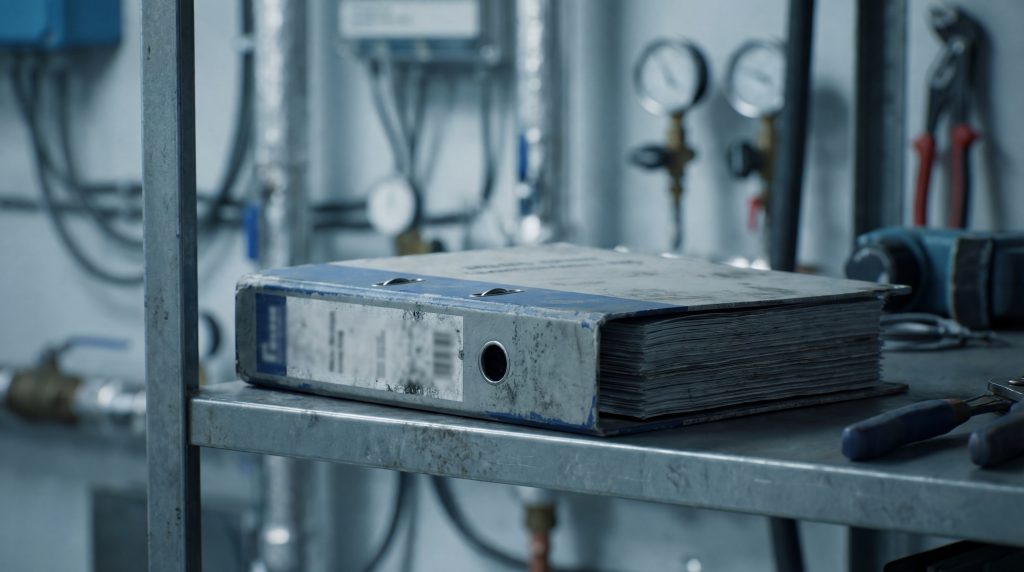
Maintenance log binder, no readable text, traceability as artifact

Consequences when responsibility is unclear

  • Change becomes overly cautious because side effects are unknown; operational cost increases.
  • Incidents become hard to reproduce because failures arise from combinations, not from single faults.
  • Decisions decouple from ownership, because fixes come from whoever has access in the moment, not from whoever owns the system boundary.
  • Rebuild pressure increases, often prematurely, driven by real friction rather than by a measured assessment.

Closing reflection

Quick fixes are unavoidable. Stability depends on whether temporary measures are systematically returned to explicit structure.

Release processes are the real availability architecture

Framing

As soon as a website carries operational weight, deployment stops being a technical gesture. It becomes the mechanism by which decisions enter production. When releases are treated as delivery work, availability and traceability default to whatever happens to be implicit.

Technical core

A release process is an architecture. Not as a diagram, but as a controlled sequence of state changes. In many organizations it is historically grown: manual steps, fragile click paths, night windows, emergency uploads. It works until the website needs to be operated as a system. Then structural failure modes appear.

First: change without change control breaks traceability.
When it is unclear what changed, incident response becomes expensive. Traceability is not a compliance topic here. It is operational economics. Without clear artifacts, versioning, a rollback path, and diffability, root cause work turns into archaeology.

Second: release path and runtime path are coupled by default.
Many systems allow code, configuration, and data to change together without explicit separation. A single release can alter schema, caching, dependencies, feature flags, and content models. This is not inherently wrong. It requires ownership: who is responsible for compatibility across these dimensions over time.

Third: hotfix culture creates divergence.
Hotfixes are not a problem because they are fast. They are a problem when they never return to the normal release path. Diverging states form: “what is live” and “what is supposed to be true.” That divergence is a system risk. It cannot be solved by individual discipline because it is structural.

Fourth: deployments without rollback are not deployments.
Rollback is not a nice-to-have. It is part of operational architecture. Without rollback, every release is a point of no return. The predictable result is a shift toward smaller and smaller changes, not out of maturity but out of irreversibility. Change frequency increases while change capacity declines.

Fifth: staging often tests syntax, not operations.
If staging does not match production data characteristics, cache paths, and external dependencies, it is not production-like in the dimensions that matter. A process built on non-representative staging produces controlled uncertainty.

A mature release process is not “DevOps maturity.” It is responsibility over state change: which change types can enter production, under what safeguards, with what rollback and verification, and with what traceable reasoning.

Concrete and glass stairwell, a controlled path without metaphor overload

Consequences when responsibility is unclear

  • Incidents last longer because it remains unclear whether code, configuration, data, or dependencies caused the issue.
  • Availability becomes accidental because each change can carry implicit side effects.
  • Operational knowledge becomes person-bound because the process exists as memory instead of as a system.
  • Technical debt moves into the process: manual steps, undocumented sequences, and implicit exceptions.

Closing reflection

In operational websites, stability is rarely a property of perfect code. It is a property of a release process that treats state changes as owned responsibility.